
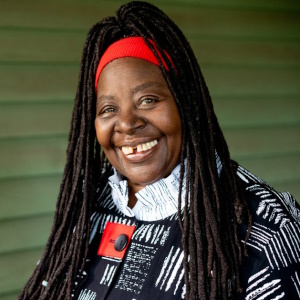
Loretta J. Ross Speaker Biography
“Calling In” Movement Maker; Founder of SisterSong Women of Color Reproductive Health Collective; Reproductive Justice Activist & Professor
Loretta J. Ross is a leading reproductive justice keynote speaker whose work spans activism, academia, and public thought leadership. As a MacArthur “Genius” fellow and Associate Professor at Smith College, Ross is known for weaving intersectionality, empathy, and critical human rights discourse into every platform she touches. Her journey began in the 1970s, but it was in 1978—when she became the third executive director of the DC Rape Crisis Center—that her trajectory shifted into national significance. This was the country’s first rape crisis center and her launchpad into the women’s movement. There, she deepened her understanding of reproductive rights, anti-violence work, and the systemic oppression faced by women of color. Over time, she helped catalyze the anti-violence movement that would eventually evolve into the global #MeToo campaign. Through decades of tireless advocacy, she has become a widely respected voice in reproductive justice, civil rights, and anti-racism education.
Activist
Ross’s impact as a reproductive justice activist spans over five decades and includes collaborations with major organizations committed to equity and change. She has worked alongside the National Organization for Women (NOW), the National Black Women’s Health Project, and the Center for Democratic Renewal (formerly the National Anti-Klan Network). Her work with the National Football League Players’ Association underscores her ability to integrate gender justice into male-dominated spaces. Notably, she co-founded SisterSong Women of Color Reproductive Justice Collective, an organization that reshaped how reproductive freedom is understood in the U.S., particularly among marginalized communities. At the heart of SisterSong’s mission is a commitment to human rights, community-based care, and the power of women of color organizing. As a sought-after speaker and consultant, Ross continues to lead conversations that expand the political imagination and uplift grassroots voices. For anyone seeking a leading reproductive justice keynote speaker with lived experience and visionary clarity, Ross stands unmatched.
Calling In The Calling Out Culture
Although Ross formally retired from grassroots organizing in 2012, her influence has only deepened through education and thought leadership. In 1996, she founded the first U.S.-based center dedicated to human rights education with a special focus on young activists. Her unique approach to teaching reframes social justice not as a battleground, but as a space for healing and connection. This philosophy is most evident in her national initiative Calling In the Calling Out Culture, which helps communities navigate ideological divides with compassion rather than condemnation. Her workshops and lectures offer tools for productive dialogue, even on the most contentious issues. Because of her groundbreaking methodology, Ross was inducted into the National Women’s Hall of Fame in 2023. She continues to shape public discourse on racial justice, reproductive freedom, and civic responsibility. With every lecture, article, and appearance, she proves why she remains a leading reproductive justice keynote speaker at the forefront of cultural transformation.
Loretta J. Ross Speaking Topics
Reproductive Justice
Exploring the term, which calls for careful attention to reproductive oppression, expanding beyond sterilization abuse to critique many interrelated issues such as population control, immigration restrictions, the gun culture, prison-to-school pipelines, and prosecution of women for pregnancy-related behaviors, etc. While RJ was created by African American women in 1994, it doesn’t only apply to women of color because it is based on the human rights framework, and everyone has the same human rights which are intersectional and apply to all. As one of the original creators of RJ, her presentation would cover all these aspects of Reproductive Justice that is quickly becoming the primary framework new voices in the movement are using to move beyond the paralyzing debates of abortion politics.
Appropriate Whiteness
A lecture series she created based on her work in the 1990s doing anti-Klan and anti-white supremacy organizing. It is directed at young people who want to move beyond the hurtful, hardened racial patterns of the past and live more intersectional lives with technology playing a major role in easing and crossing rigid boundaries. The lecture addresses situations of racial awkwardness and fears of “messing up.” It will also help to normalize discussions of race with a frank analysis of what to do and not to do in moving forward difficult dialogues. The presentation is suitable for all audiences.