

Esther Duflo Speaker Biography
Nobel Prize-Winning Economist, Development Economics Pioneer, and Co-Founder of J-PAL
Esther Duflo is one of the world’s most influential economists and a pioneer in using rigorous, real-world experimentation to understand poverty and improve public policy. In 2019, Duflo, Abhijit Banerjee, and Michael Kremer received the Nobel Prize in Economic Sciences for their experimental approach to alleviating global poverty. Their groundbreaking work transformed development economics by demonstrating how large social problems can be broken into smaller, testable questions—and how evidence from the real world can reveal which policies actually improve people’s lives. Esther Duflo’s research spans education, healthcare, financial inclusion, governance, the environment, climate, and economic opportunity. At the heart of her work is a deceptively simple question: What actually works? Her evidence-based approach has influenced governments, nonprofits, international institutions, and policymakers around the world.
Keynote Speaker Esther Duflo at a Glance
- Co-recipient of the 2019 Nobel Prize in Economic Sciences for pioneering an experimental approach to alleviating global poverty
- Lemann Foundation Professor of Economics at the University of Zurich, with continuing affiliations at MIT and the Collège de France
- Co-founder and Co-director of the Abdul Latif Jameel Poverty Action Lab (J-PAL)
- Co-author of the award-winning Poor Economics and Good Economics for Hard Times
- Leading authority on development economics, poverty, inequality, education, healthcare, climate, and evidence-based public policy
Transforming the Fight Against Global Poverty
Rather than approaching poverty as one enormous problem with a universal solution, Esther Duflo has helped establish a more practical approach: identify specific problems, develop potential interventions, test them in real-world conditions, and use the resulting evidence to determine what works. This approach has generated important insights into questions involving education, healthcare, financial decision-making, economic opportunity, and government programs. It has also challenged assumptions about why people make particular choices when living with limited resources. Duflo’s research demonstrates that programs created with good intentions do not necessarily produce good outcomes. Careful experimentation can reveal why seemingly promising ideas fail—and why relatively small, inexpensive interventions can sometimes have surprisingly significant effects.
Co-Founder of J-PAL
In 2003, Esther Duflo co-founded the Abdul Latif Jameel Poverty Action Lab (J-PAL) with Abhijit Banerjee and Sendhil Mullainathan. J-PAL has grown into a global research organization dedicated to reducing poverty by ensuring that public policy is informed by scientific evidence. Its affiliated researchers use randomized evaluations to determine which programs work, why they work, and how successful interventions can be expanded. The organization’s work has influenced policies across the globe, connecting academic research directly with governments, nonprofits, donors, and organizations seeking more effective solutions to poverty and inequality. Esther Duflo continues to co-direct J-PAL with Abhijit Banerjee, maintaining an important connection between her academic research and practical policymaking.
University of Zurich, MIT, and Collège de France
Esther Duflo became Lemann Foundation Professor in the Department of Economics at the University of Zurich in 2026. She and Abhijit Banerjee are also helping establish the university’s Lemann Center for Development, Education and Public Policy. Duflo maintains a part-time position at MIT, where she has spent much of her distinguished academic career and co-founded J-PAL. She also holds the Poverty and Public Policy Chair at the Collège de France in Paris. Across these institutions, Esther Duflo continues to explore development economics, behavioral economics, public policy, education, healthcare, migration, social protection, climate, and the economic decisions people make under conditions of poverty.
Poor Economics
Esther Duflo and Abhijit Banerjee brought their evidence-based approach to a broad international audience with Poor Economics: A Radical Rethinking of the Way to Fight Global Poverty. The award-winning book examines the economic lives of people living in poverty and challenges many common assumptions about healthcare, education, savings, borrowing, entrepreneurship, family decisions, and economic opportunity. Rather than searching for a single grand solution to global poverty, Duflo and Banerjee demonstrate how understanding specific problems can lead to practical interventions capable of producing measurable improvements. Poor Economics won the Financial Times/Goldman Sachs Business Book of the Year Award and has been translated around the world. A revised and updated edition published in 2025 added new material reflecting the evolution of development economics and the authors’ continuing research.
Good Economics for Hard Times
In Good Economics for Hard Times, Esther Duflo and Abhijit Banerjee apply their evidence-driven approach to some of the most difficult economic and social challenges confronting societies today. The book examines inequality, immigration, globalization, trade, economic growth, technological change, climate change, and political division. Rather than approaching these subjects through ideology or conventional wisdom, Duflo asks what the available evidence actually tells us. This broader body of work makes Esther Duflo relevant not only to audiences interested in international development and poverty, but also to organizations confronting questions about economic opportunity, social change, technology, sustainability, and the effectiveness of public policy.
Education, Healthcare, and Economic Opportunity
Education and healthcare have been central to Esther Duflo’s research because access alone does not necessarily produce better outcomes. Why do children sometimes fail to learn despite attending school? Why might families decline inexpensive or free preventative healthcare? Which incentives actually change behavior? How can policymakers distinguish programs that appear promising from those that demonstrably improve lives? Duflo uses field experiments to investigate these questions, helping uncover the behavioral, institutional, and economic factors influencing outcomes. Her work provides important lessons for governments, foundations, nonprofit organizations, educational institutions, and other leaders seeking to make investments that generate measurable social impact.
Climate, Environment, and Public Policy
Esther Duflo’s work also addresses the relationship between poverty, environmental conditions, and climate change. Climate-related challenges frequently affect lower-income communities most severely, making environmental policy inseparable from questions involving inequality, development, health, and economic opportunity. Duflo applies the same evidence-based approach that characterizes her poverty research to questions about environmental and climate policy: What interventions work? How do individuals respond to incentives? Who bears the costs? And how can policies be designed to improve outcomes while recognizing the realities faced by vulnerable populations?
Award-Winning Economist and Author
Esther Duflo has received many of economics’ most prestigious honors. In addition to the 2019 Nobel Prize in Economic Sciences, her honors include the Princess of Asturias Award for Social Sciences, the Infosys Prize, the John Bates Clark Medal, and a MacArthur Fellowship. Duflo is a member of the National Academy of Sciences and a Corresponding Fellow of the British Academy. Her work has established her as one of the defining figures in modern development economics and an influential advocate for bringing greater evidence and humility to economic policymaking.
Education and Academic Career
Born in Paris, Esther Duflo studied history and economics at the École Normale Supérieure before earning her Ph.D. in economics from MIT in 1999. Her career has combined academic research with an unusual commitment to applying economics to real-world problems. Rather than treating economic research solely as a theoretical exercise, Esther Duflo has demonstrated how economists can work alongside governments, nonprofits, and communities to test ideas and improve policies. That combination of rigorous scholarship and practical impact has become a defining characteristic of her career.
Esther Duflo Keynote Speaker
As a keynote speaker, Esther Duflo brings Nobel Prize-winning research to life, challenging audiences to reconsider conventional assumptions about poverty, inequality, economic development, and public policy. Duflo addresses poverty alleviation, evidence-based decision-making, education, healthcare, economic opportunity, inequality, climate change, globalization, and the economic and social challenges explored in Poor Economics and Good Economics for Hard Times. Esther Duflo combines rigorous research with compelling real-world examples, helping audiences understand why intuition and good intentions are not always enough—and how experimentation can uncover better solutions. Her presentations are particularly relevant for economic forums, government and policy conferences, foundations, nonprofit organizations, universities, associations, global development organizations, corporate social impact programs, and leadership audiences interested in using evidence to solve complex problems.
Using Evidence to Create Meaningful Change
Esther Duflo gives audiences a powerful framework for questioning assumptions, testing ideas, learning from evidence, and finding practical solutions to some of the world’s most difficult economic and social challenges. Esther Duflo can be booked for keynote presentations, economic and policy conferences, corporate meetings, association events, universities, nonprofit programs, and international forums through Speakers.com. Contact Speakers.com to learn more about Esther Duflo’s speaking fee, availability, and customized presentation options.
Esther Duflo Speaking Topics
Poor Economics: A Radical Rethinking of the Way to Fight Global Poverty
Why do people living in poverty sometimes make choices that appear counterintuitive from the outside? Why do children struggle to learn even when they attend school? Why do families fail to take advantage of inexpensive or free healthcare? And why do some well-intentioned programs succeed while others accomplish surprisingly little? Drawing on the newly revised and updated edition of Poor Economics and decades of groundbreaking field research, Esther Duflo takes audiences inside the economic lives of people living in poverty. She demonstrates why effective solutions begin by understanding the specific constraints and decisions people face rather than relying on assumptions about poverty. Through experimentation and evidence, Duflo shows how governments and organizations can identify interventions that work, discard those that do not, and build more effective approaches to education, healthcare, financial inclusion, and economic opportunity.
Social Experiments to Fight Poverty
Esther Duflo has dedicated her career to a deceptively simple question: What actually works? Drawing upon the experimental approach that earned her and her colleagues the 2019 Nobel Prize, Duflo demonstrates how randomized evaluations can help researchers and policymakers test ideas in the real world. Instead of relying exclusively on theory, ideology, or intuition, social programs can be evaluated to determine whether they actually improve outcomes—and why. Through compelling examples from research conducted around the world, Duflo shows how experimentation has uncovered unexpected insights in education, healthcare, financial inclusion, governance, and poverty reduction. Audiences come away with a powerful lesson that extends beyond development economics: difficult problems become more manageable when leaders are willing to question assumptions, experiment, measure results, and learn from evidence.
Good Economics for Hard Times
Immigration, inequality, globalization, technological disruption, slowing economic growth, and climate change are among the issues generating intense economic and political debate around the world. Drawing upon Good Economics for Hard Times, Esther Duflo examines what rigorous economic research can tell us about these contentious issues and challenges many of the assumptions that dominate public discussion. She demonstrates how economics, when grounded in evidence and an understanding of human behavior, can help societies move beyond ideological divisions toward practical solutions. Duflo offers audiences a thought-provoking perspective on how better economic thinking can help create societies that are more prosperous, equitable, and capable of confronting the difficult challenges ahead.
Evidence-Based Policy: Finding What Actually Works
Good intentions do not guarantee good outcomes. Esther Duflo explores how governments, businesses, foundations, and nonprofit organizations can use evidence to determine whether programs and policies are achieving their intended results. Drawing upon decades of field experiments, Duflo explains how large and complicated problems can be divided into specific questions that can be tested and evaluated. She shares lessons about experimentation, measurement, scaling successful interventions, and learning from failure—providing a framework for evidence-based decision-making with applications far beyond poverty alleviation.
Education, Health and Economic Opportunity
Education and health are fundamental to economic opportunity, yet simply providing access does not always produce the results policymakers expect. Esther Duflo draws on extensive research to examine why seemingly sensible interventions sometimes fail and why relatively small changes can occasionally produce significant improvements. Using evidence from real-world experiments, she explores how incentives, information, behavior, institutional design, and local circumstances influence outcomes. Her research offers important lessons for leaders seeking more effective approaches to education, healthcare, economic development, and social investment.
Esther Duflo Books
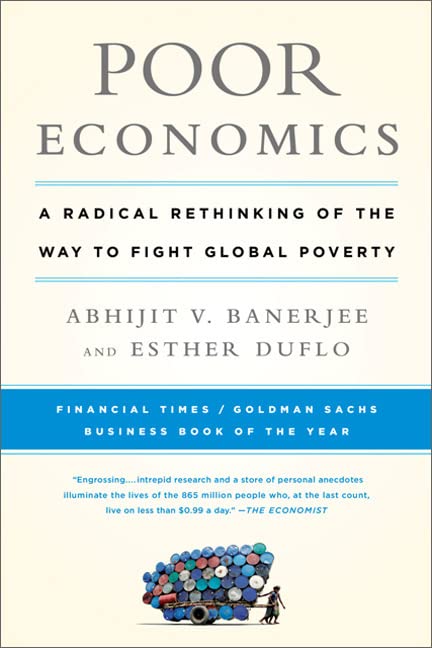
Poor Economics: A Radical Rethinking of the Way to Fight Global Poverty
Purchase Book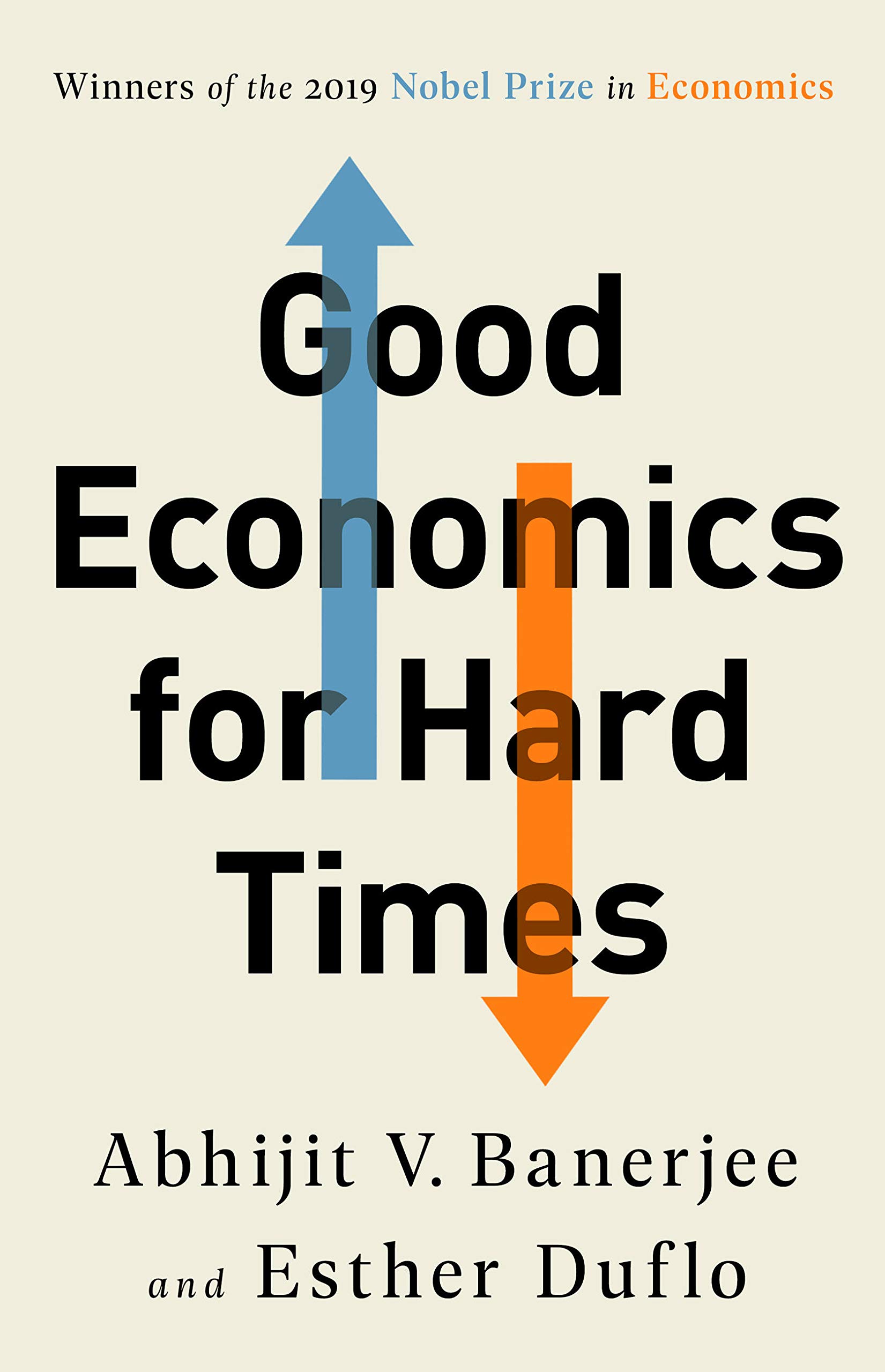
Good Economics for Hard Times
Purchase BookEsther Duflo Videos
Esther Duflo Articles
Esther Duflo Speaker Testimonials
“Nobel laureate Esther Duflo delivered a thought-provoking keynote... Particularly compelling was her discussion of a carbon pricing mechanism designed to be both practical and attractive for developed economies and developing countries alike.”
- Bea Herz-Stalder | UBS
“I highly recommend this thought provoking keynote by Esther Duflo for anyone interested in the economics of climate change.”
- Robert Goex | University of Zurich