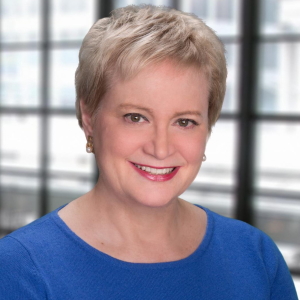

Jason Hwang Speaker Biography
Healthcare Futurist, Physician, Disruptive Innovation Expert, and Co-Author of The Innovator’s Prescription
Jason Hwang, M.D., M.B.A., is a physician, healthcare innovator, entrepreneur, and leading authority on disruptive innovation in healthcare. For more than two decades, he has examined how technology, new business models, and changing models of care can make healthcare more accessible, affordable, efficient, and patient-centered. Dr. Hwang was a longtime collaborator with legendary Harvard Business School professor Clayton Christensen and co-authored the influential The Innovator’s Prescription: A Disruptive Solution for Health Care with Christensen and the late Dr. Jerome Grossman. His work applies the principles of disruptive innovation to some of healthcare’s most persistent challenges, including rising costs, limited access, workforce constraints, inefficient delivery models, and the difficulty of integrating transformative technologies into established healthcare systems. Today, Hwang continues to work at the intersection of medicine, entrepreneurship, technology, and healthcare transformation. His experience building healthcare companies and studying disruptive innovation gives him a distinctive perspective on artificial intelligence, digital health, new care-delivery models, healthcare business strategy, and the future of medicine.
Keynote Speaker Jason Hwang at a Glance
- Physician, healthcare innovator, and leading authority on disruptive innovation who helps healthcare organizations rethink how care is delivered, made more accessible, and transformed through new technologies and business models.
- Co-founder of the organization now known as the Clayton Christensen Institute for Disruptive Innovation and longtime collaborator with legendary Harvard Business School professor Clayton Christensen, bringing the principles of disruptive innovation directly to healthcare transformation.
- Co-author of the influential The Innovator’s Prescription: A Disruptive Solution for Health Care, named the American College of Healthcare Executives’ 2010 Book of the Year and recipient of the 2011 Health Service Journal Circle Prize for Inspiring Innovation.
- Brings a rare combination of clinical medicine, entrepreneurship, healthcare strategy, and a Harvard MBA to keynotes that help healthcare leaders navigate AI, innovation, disruptive technologies, new care models, and the future of healthcare.
Disruptive Innovation and the Clayton Christensen Institute
Dr. Hwang co-founded the Innosight Institute, the organization now known as the Clayton Christensen Institute for Disruptive Innovation, and served as its Executive Director of Healthcare. Working closely with Clayton Christensen, Hwang helped bring the theory of disruptive innovation into healthcare—examining why established healthcare organizations often struggle to innovate and how simpler, more affordable and accessible models can transform the industry. That collaboration culminated in The Innovator’s Prescription: A Disruptive Solution for Health Care, co-authored with Christensen and Dr. Jerome Grossman. The book applies disruptive innovation theory to healthcare and examines how technological advances, new business models, and changes in the delivery of care can address healthcare’s longstanding problems of cost and accessibility. Hwang’s work challenges healthcare leaders to look beyond incremental improvements and ask a more fundamental question: How can we redesign healthcare around what patients actually need rather than simply improving the systems that already exist?
Healthcare Entrepreneur and Digital Health Pioneer
Hwang has not limited his work to studying healthcare disruption—he has helped build disruptive healthcare businesses himself. He co-founded Lemonaid Health, formerly Icebreaker Health, and served as its Chief Medical Officer. The digital healthcare company pioneered a highly scalable model for delivering healthcare remotely, using technology to make routine medical care more convenient and accessible. That real-world entrepreneurial experience gives Hwang an important perspective on healthcare innovation. He understands the operational, clinical, regulatory, and business challenges involved in taking a promising healthcare technology or delivery model from an idea to something patients can actually use. His work in digital health also reinforces a principle that has long shaped his thinking: technology creates its greatest value when it enables an entirely new model of care rather than simply digitizing the old one. His earlier presentations, for example, challenged healthcare organizations to think beyond reproducing the traditional physician visit on a video screen and instead consider how technology could standardize workflows, automate routine processes, increase scalability, and enable entirely new care settings.
Artificial Intelligence and the Future of Healthcare
Artificial intelligence represents the next major opportunity—and challenge—for healthcare disruption. Hwang’s current work extends his longstanding focus on technology-enabled healthcare into areas where AI, advanced analytics, automation, and better use of healthcare data can help organizations rethink entrenched processes. Rather than viewing AI simply as another technology to add to the existing healthcare system, Hwang approaches it through the lens of disruptive innovation. Where can AI eliminate unnecessary complexity? Which routine processes can be automated? How can technology allow highly trained clinicians to spend more time on work that genuinely requires their expertise? And which existing healthcare business models may need to change before AI can deliver its full value? These questions build naturally on Hwang’s earlier work examining the concept of “automating the automatable.” He has long argued that moving rote and routine healthcare processes to software-based platforms can expand capacity and allow physicians to concentrate on more complex care—an idea that has become even more relevant with the rapid development of artificial intelligence.
Transforming Healthcare Delivery and Business Models
A central theme of Hwang’s work is that meaningful healthcare reform requires more than new technology. Healthcare organizations also need new business models capable of taking advantage of that technology. Traditional healthcare institutions frequently attempt to provide everything for everyone under one organizational model. Hwang argues that healthcare can become more efficient and effective when different types of medical problems are matched with different delivery and business models. For complex and uncertain conditions, highly trained specialists and multidisciplinary teams remain essential. More predictable conditions and procedures, however, can increasingly be delivered through standardized processes, specialized facilities, digital platforms, new categories of caregivers, and technology-enabled models. By separating these fundamentally different types of healthcare delivery, organizations can improve quality and predictability while reducing unnecessary cost and complexity.
Precision Medicine, Digital Health and Patient-Centered Innovation
Hwang has also explored the transition from intuitive medicine to precision medicine. Historically, many medical conditions required clinicians to rely heavily on judgment developed through years of experience because diseases could not be precisely diagnosed or understood. Advances in molecular biology, diagnostics, data, and medical technology increasingly allow healthcare providers to diagnose conditions more accurately and select treatments with more predictable outcomes. At the same time, digital health technologies are changing where and how care can be delivered. Telemedicine, home diagnostics, patient-generated data, software-based care platforms, hospital-at-home programs, and other innovations are shifting appropriate care away from traditional brick-and-mortar settings. For Hwang, the ultimate objective is not technology for technology’s sake. It is creating healthcare that is more accessible, affordable, scalable, and responsive to patients.
Physician, Harvard MBA and Healthcare Strategist
Hwang brings an unusually broad perspective to healthcare transformation because he has worked across medicine, business, research, and entrepreneurship. He earned his B.S. and M.D. from the University of Michigan and his M.B.A. from Harvard Business School. He served as Chief Resident and Clinical Instructor at the University of California, Irvine and has clinical experience with Kaiser Permanente and the Department of Veterans Affairs. His combination of medical training and business expertise enables him to bridge a divide that frequently complicates healthcare innovation: the gap between what makes sense clinically and what can succeed operationally and economically.
Healthcare Keynote Speaker on Innovation, AI and the Future of Care
As a keynote speaker, Jason Hwang brings together the perspectives of a physician, healthcare entrepreneur, Harvard MBA, disruptive innovation authority, and collaborator of Clayton Christensen. Rather than simply predicting which technologies will become important, he helps audiences understand how innovation can fundamentally change the way healthcare organizations operate and compete. Hwang speaks to healthcare executives, hospitals and health systems, physician leaders, insurers, healthcare associations, technology companies, investors, and organizations navigating rapid change in medicine. His presentations explore disruptive innovation, artificial intelligence, digital health, healthcare technology, new business models, precision medicine, telemedicine, accessibility, affordability, and the future of healthcare delivery. For leaders confronting unprecedented technological and structural change, Hwang provides a framework for distinguishing incremental improvement from genuine disruption—and for recognizing the new opportunities that emerge when healthcare is redesigned around simplicity, accessibility, affordability, and patient needs.
Jason Hwang is available to book for healthcare conferences, executive meetings, association events, leadership programs, and corporate keynotes through Speakers.com.
Jason Hwang Speaking Topics
The Innovator’s Prescription: How Disruptive Innovation Will Transform Health Care
Drawing from his groundbreaking work with Clayton Christensen, Dr. Hwang explains how disruptive innovation can move healthcare from expensive, expertise-intensive models toward more accessible and affordable systems. He examines precision medicine, new technologies and innovative delivery models that can improve outcomes while fundamentally changing the economics of healthcare.
Disrupting U.S. Health Care
When we think of “quality” health care, we generally assume that more expertise is always preferred -- doctors must be better than nurses, specialists must be better than primary care doctors, and hospitals and clinics must be better than virtual interactions. This mentality, in part, has left us with a health care system that is unaffordable, inconvenient and largely broken. But if we were to apply the principles of disruptive innovation to our collapsing health care system—by using advances in technology to help nurses and primary care physicians to do more sophisticated work—a costly, hard-to-schedule trip to the doctor may become increasingly rare. Disruptive innovations like direct-to-consumer diagnostics, patient-controlled electronic health records, telemedicine, and hospital-at-home models of care have the potential to create transformative change in the health care industry, argues physician Jason Hwang. Such models of care also have the potential to be superior options with distinct advantages for paving the way toward more accessible, affordable and quality health care.
Artificial Intelligence and the Next Disruption in Healthcare
AI is creating new opportunities to rethink how healthcare organizations analyze information, automate routine processes, identify fraud and waste, and allocate valuable clinical resources. Drawing on his current work with Polyview Health and decades spent studying disruptive innovation, Hwang explores where AI can create genuine healthcare value—and how leaders can distinguish transformational innovation from technology that simply reinforces an inefficient status quo.
The Next Generation of Digital Health and Telemedicine
Telemedicine's true disruptive potential goes far beyond putting the traditional physician visit on a video screen. Drawing from his experience building digital healthcare companies, Hwang examines how automation, asynchronous care, software-based workflows and new care settings can increase efficiency and scalability while allowing clinicians to focus their expertise on patients and problems that genuinely require it.
Reinventing the Business Models of Hospitals and Physician Practices
True healthcare transformation requires more than new technology—it requires new business models. Hwang explains why the traditional one-size-fits-all healthcare organization struggles with cost and efficiency and explores how distinct delivery models built around different types of care can improve quality, predictability, affordability and patient experience.
How Technology Is Changing Health Care—for Good
Traditional health care is simply not set up to evolve alongside rapidly advancing technologies. Consider the influx of health data from wearable fitness devices and home diagnostic equipment. Doctors either don't know what do with the data, or they can't keep up with the data deluge. What's needed is a software solution that can absorb and process the data, supported by doctors who can then make both the sophisticated and regulatory-required decisions, says Dr. Jason Hwang. It already exists in what Dr. Hwang describes as an asynchronous, cloud-based platform. By moving more of the rote, routine care online - "automating the automatable" - it frees up capacity for doctors to focus on more complex care that genuinely requires their expertise. Dr. Hwang also explores the changing relationship between providers and patients, and explains why he believes digital health care will ultimately enhance doctor satisfaction and help eliminate doctor shortages.
Jason Hwang Books
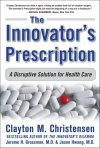
The Innovator’s Prescription: A Disruptive Solution for Health Care
Purchase BookJason Hwang Videos
Jason Hwang Articles
- Best Speakers for Healthcare Conferences: Top Healthcare Keynote Speakers for 2026
- Top AI Speakers in Healthcare in 2026: How Artificial Intelligence Is Transforming Medicine
- Top Healthcare Keynote Speakers in 2026
- Top Asian American and Pacific Islander Heritage Month Speakers (AAPI) in 2026
- FUTURECARE: The Future of Healthcare
Jason Hwang Speaker Testimonials
"We are very grateful for Jason’s contribution to our ‘Connect for Impact’ conference. He delivered an inspiring, thoughtful and tailor-made keynote which was highly appreciated by our guests. Besides that, Jason was also available for private conversations, reflecting on ideas, giving comments and advice!"
- | Noaber Foundation
"Your presentation on Innovation in Healthcare Service Delivery was exceptionally well received. You truly connected with our members who seek entrepreneurial leadership and are eager to advance behavioral healthcare "back home" and industry-wide. Thank you so much for an excellent presentation."
- | MHCA
"Jason is a rock star! We were so pleased with his presentation he set the tone for the rest of the conference. He is also one of the nicest people I've ever met."
- | University of Miami