
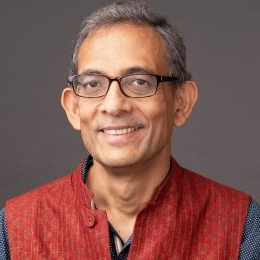
Abhijit Banerjee Speaker Biography
Nobel Prize-Winning Economist, MIT Professor, Co-Founder of J-PAL, and Bestselling Author
Abhijit Banerjee is one of the world’s most influential economists, renowned for transforming how economists, governments, and international organizations approach poverty, development, and public policy.In 2019, Abhijit Banerjee, Esther Duflo, and Michael Kremer received the Nobel Prize in Economic Sciences for their experimental approach to alleviating global poverty. Their groundbreaking work helped pioneer the use of randomized controlled trials in development economics, allowing researchers to test which policies and interventions actually improve people’s lives. Rather than treating poverty as one enormous and seemingly insurmountable problem, Banerjee’s research demonstrates how it can be broken into smaller, specific questions involving education, healthcare, access to credit, economic opportunity, and human behavior. This evidence-based approach has influenced development policy around the world.
Keynote Speaker Abhijit Banerjee at a Glance
- Co-recipient of the 2019 Nobel Prize in Economic Sciences for his experimental approach to alleviating global poverty
- Ford Foundation International Professor of Economics at MIT and Lemann Foundation Professor at the University of Zurich
- Co-founder and Director of the Abdul Latif Jameel Poverty Action Lab (J-PAL), a global leader in evidence-based approaches to reducing poverty
- Co-author of the award-winning Poor Economics and Good Economics for Hard Times
- Internationally recognized authority on development economics, inequality, economic growth, public policy, education, and poverty
MIT Professor and Global Economic Scholar
Abhijit Banerjee is the Ford Foundation International Professor of Economics at the Massachusetts Institute of Technology and the Lemann Foundation Professor in the Department of Economics at the University of Zurich. His research encompasses development economics, economic inequality, education, healthcare, behavioral economics, economic growth, and the ways individuals respond to incentives and constraints. Banerjee’s academic career and research have made him an important voice in discussions about how economic policy can move beyond theory and ideology toward solutions grounded in real-world evidence.
Co-Founder of J-PAL
In 2003, Abhijit Banerjee co-founded the Abdul Latif Jameel Poverty Action Lab (J-PAL) at MIT with Esther Duflo and Sendhil Mullainathan. J-PAL has grown into a global research center dedicated to reducing poverty by ensuring that public policy is informed by scientific evidence. Its affiliated researchers conduct randomized evaluations around the world to determine which programs and policies work, why they work, and how successful approaches can be applied on a larger scale. Through J-PAL, Banerjee’s research has helped change the relationship between academic economics and public policy, demonstrating how carefully designed experiments can provide governments and organizations with better information for allocating resources and improving outcomes.
Poor Economics
Abhijit Banerjee and Esther Duflo brought many of these ideas to a wider audience with Poor Economics: A Radical Rethinking of the Way to Fight Global Poverty. The award-winning book draws upon years of research to examine the everyday economic decisions made by people living in poverty. Rather than relying on assumptions about why people behave as they do, Banerjee and Duflo investigate questions involving healthcare, education, savings, borrowing, family planning, entrepreneurship, and other factors that influence economic opportunity. Poor Economics received the Goldman Sachs Business Book of the Year Award and helped introduce a broad international audience to the evidence-based approach to development economics pioneered by Banerjee and his colleagues.
Good Economics for Hard Times
In Good Economics for Hard Times, Abhijit Banerjee and Esther Duflo apply their evidence-driven approach to some of the most contentious economic and social challenges facing the world. The book explores inequality, immigration, international trade, economic growth, technological disruption, climate change, and political polarization while challenging assumptions that often dominate public debate. Banerjee argues for approaching these difficult issues with evidence, intellectual curiosity, and an understanding of how real people actually behave rather than relying solely on economic theory or ideological certainty. His ability to question conventional wisdom while making sophisticated economic research understandable has become a defining characteristic of both his writing and public presentations.
Economics, Inequality and Public Policy
A central theme throughout Banerjee’s work is the importance of understanding what actually works. Economic and social policies are frequently created with good intentions, but Abhijit Banerjee demonstrates that intuition alone is not enough to determine whether an intervention will produce the desired results. His research asks practical questions: Why do some educational interventions succeed while others fail? Why might people decline free preventative healthcare? What prevents potentially productive entrepreneurs from expanding their businesses? Why do certain anti-poverty programs generate lasting improvements while others accomplish very little? By testing assumptions against real-world evidence, Banerjee provides a framework for better decision-making that has implications far beyond development economics.
Global Policy and Leadership
Abhijit Banerjee’s influence extends beyond academia. He served on the U.N. Secretary-General’s High-Level Panel of Eminent Persons on the Post-2015 Development Agenda and has contributed his expertise to governments and organizations confronting questions of poverty, education, economic development, and public policy. Banerjee serves as a trustee of Save the Children USA and Chair of the Global Education Evidence Advisory Panel. He is also a member of the National Academy of Sciences and a fellow of the American Academy of Arts and Sciences and the Econometric Society. His perspective is particularly valuable for policymakers, business leaders, international organizations, foundations, universities, and institutions seeking to make better decisions in complex environments where conventional assumptions may not provide reliable answers.
Award-Winning Author and Thought Leader
Abhijit Banerjee has authored and co-authored numerous books and scholarly articles exploring economics, development, poverty, and human behavior. In addition to Poor Economics and Good Economics for Hard Times, his books include Cooking to Save Your Life and Chhaunk: On Food, Economics and Society, reflecting an intellectual curiosity that extends beyond traditional economic research into culture, food, society, and everyday life. His honors include the Infosys Prize in Social Sciences, a Guggenheim Fellowship, and an Alfred P. Sloan Research Fellowship. Banerjee has also been recognized by Foreign Policy as one of its Top 100 Global Thinkers.
Education and Academic Career
Born in Mumbai and raised in Kolkata, India, Abhijit Banerjee studied economics at the University of Calcutta and Jawaharlal Nehru University before earning his Ph.D. in economics from Harvard University. His academic career has included appointments at leading universities, culminating in his distinguished positions at MIT and the University of Zurich. Banerjee’s combination of academic rigor, extensive field research, and engagement with real-world policy challenges has helped establish him as one of the leading economic thinkers of his generation.
Abhijit Banerjee Keynote Speaker
As a keynote speaker, Abhijit Banerjee brings Nobel Prize-winning economic research to life for audiences seeking a deeper understanding of the forces shaping economies and societies. Banerjee addresses topics including the global economy, inequality, poverty, economic growth, public policy, education, migration, trade, climate change, and evidence-based decision-making. Abhijit Banerjee is particularly effective at challenging conventional assumptions and demonstrating how seemingly straightforward economic questions often become more complicated—and more interesting—when examined through real-world evidence. His presentations are well suited for corporate conferences, economic forums, financial and leadership events, universities, government programs, international organizations, foundations, and associations seeking an authoritative yet thought-provoking perspective on today’s most consequential economic and social challenges.
Using Evidence to Make Better Decisions
Abhijit Banerjee challenges audiences to look beyond conventional wisdom and use evidence, experimentation, and a deeper understanding of human behavior to make better decisions about the economic and social challenges shaping our future. Abhijit Banerjee can be booked for keynote presentations, economic conferences, corporate meetings, leadership events, association programs, universities, and international forums through Speakers.com. Contact Speakers.com to learn more about Abhijit Banerjee’s speaking fee, availability, and customized presentation options.
Abhijit Banerjee Speaking Topics
Poor Economics: A Radical Rethinking of the Way to Fight Global Poverty
Why do people living in poverty sometimes borrow money in order to save? Why do families miss free, potentially lifesaving immunizations while spending money on less effective treatments? Why do children struggle to learn even when they attend school? Drawing on Poor Economics and decades of research conducted around the world, Abhijit Banerjee challenges conventional assumptions about poverty and examines what evidence reveals about the decisions people make when resources are scarce. Rather than approaching poverty as a single overwhelming problem, Banerjee demonstrates how specific challenges can be studied, tested, and addressed through carefully designed interventions. He explores why well-intentioned anti-poverty programs sometimes fail and what research tells us about creating more effective solutions in education, healthcare, finance, and economic opportunity.
Good Economics for Hard Times
Economic growth, inequality, immigration, trade, technological disruption, and climate change have become sources of intense political and social debate. Drawing on Good Economics for Hard Times, Abhijit Banerjee examines what rigorous economic research actually tells us about these complex issues—and where conventional wisdom gets them wrong. Banerjee explores surprising findings about migration, international trade, employment, wages, inequality, and the elusive ingredients necessary for sustained economic growth. Rather than reducing complicated problems to ideological talking points, he demonstrates how evidence, experimentation, and a better understanding of human behavior can lead to more effective economic and public policy. Ultimately, Banerjee offers an optimistic argument that society has the resources and knowledge necessary to address many of its greatest challenges when economics is approached with evidence, pragmatism, empathy, and respect.
Global Economic Challenges
Drawing on his Nobel Prize-winning research and decades of work in development economics, Abhijit Banerjee examines the interconnected forces shaping the global economy. From inequality and economic growth to technological change, trade, migration, and shifting public policy, he challenges audiences to distinguish commonly held assumptions from what empirical evidence actually demonstrates. Banerjee provides a thought-provoking framework for understanding how policymakers, businesses, and institutions can make better decisions amid economic and social uncertainty.
Evidence-Based Policy: What Actually Works?
How can governments, institutions, and organizations determine whether their policies actually produce the intended results? Abhijit Banerjee explores the experimental approach to economics that earned him, Esther Duflo, and Michael Kremer the 2019 Nobel Prize. By breaking enormous social challenges into smaller, testable questions, researchers can discover which interventions work, which fail, and why. Banerjee demonstrates how this evidence-based mindset can improve decision-making in areas ranging from education and healthcare to poverty reduction and economic development.
Abhijit Banerjee Books
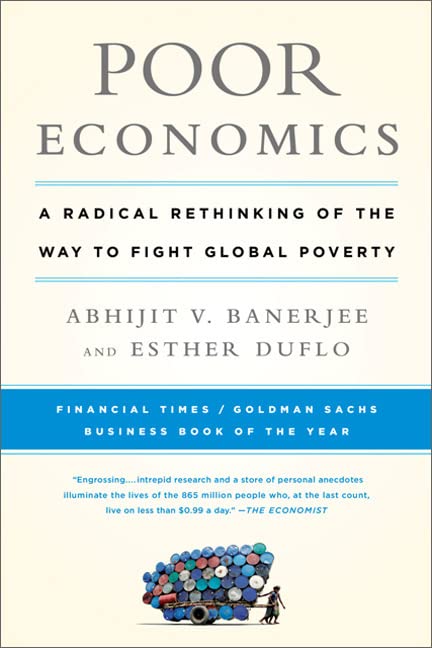
Poor Economics: A Radical Rethinking of the Way to Fight Global Poverty
Purchase Book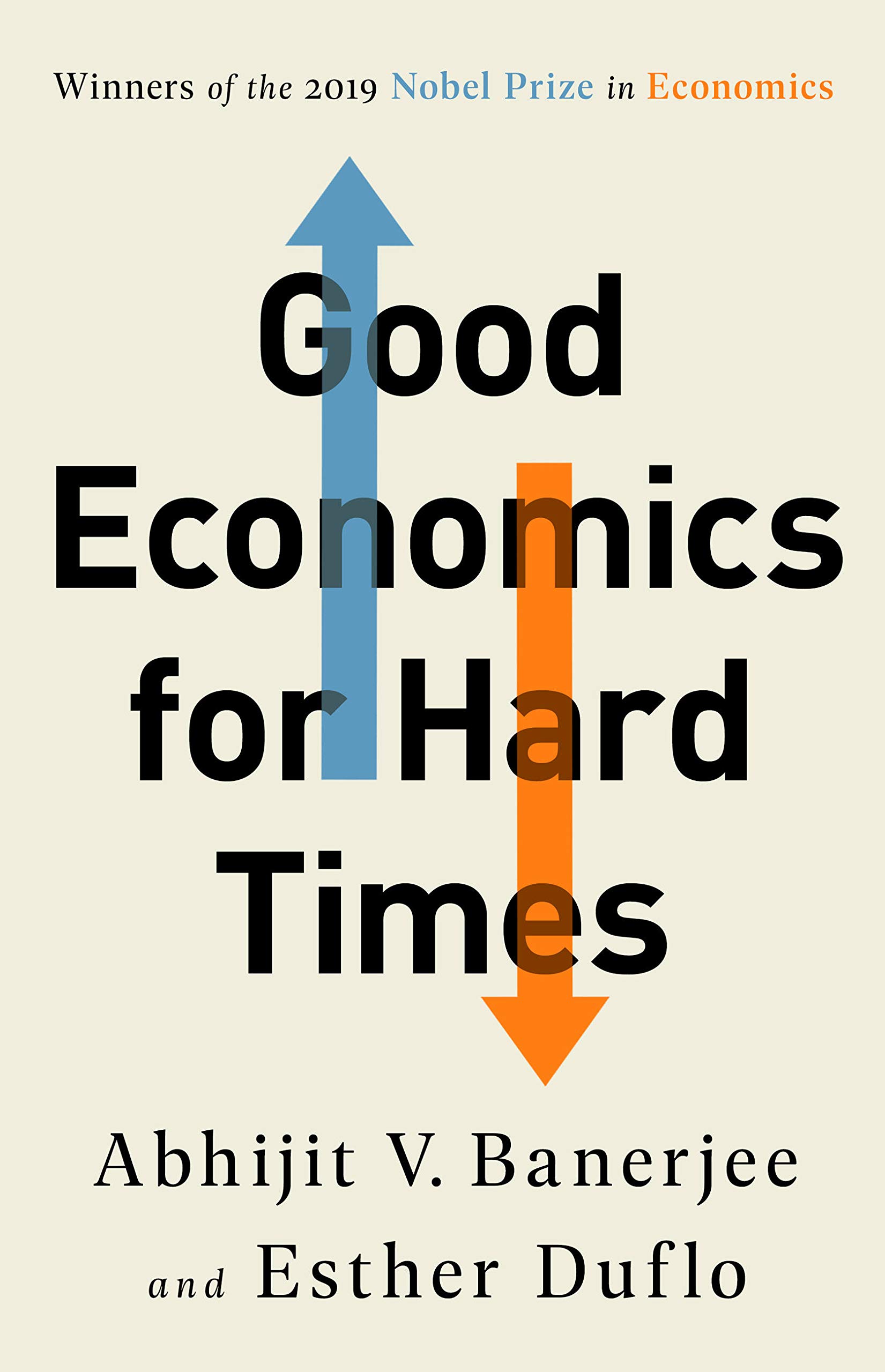
Good Economics for Hard Times
Purchase BookAbhijit Banerjee Videos
Abhijit Banerjee Articles
Abhijit Banerjee Speaker Testimonials
“Wonderful program. Unique, informative and thought-provoking by Nobel laureate Prof. Banerjee.”
- Adv. Rabin Majumder | Supreme Court of India
“It was a great lecture by Prof. Banerjee.”
- Ameeta Verma Duggal, Attorney |
“Abhijit Banerjee brings clarity, depth and a refreshing perspective to complex global issues. His sessions leave audiences informed, inspired and ready to rethink policy and progress
- Tim Munton |